
FAST QMS Software is a collection of advanced and latest Quality Solutions, to help organizations ensure product safety, improve product quality and achieve regulatory compliance, lower product cost, expanded margins, and market share are achieved regardless of your industry focus. Our Quality Management Software encompases end-to-end quality management processes for your organization while ensuring Data Security, Flexibility, Reliability, and Scalability. FAST QMS is a holistic Quality Management Software Solution suitable for small, medium, and large organizations. FAST QMS modules are designed and developed keeping in mind the latest ISO, IATF and VDA standards..
The functionality, sturdiness, and accuracy of your inspection management procedure during the product's design and manufacturing phases determines its quality. Before releasing a product to the customer, the check the quality of the product by conducting inspections at various stages of the manufacturing process plays a vital role. FAST QMS' Inspection Management Software simplifies the complexity of the inspection process. As required by the process or a regulatory need, FAST QMS has facility to perform Incoming(RM), Work-in-progress(WIP) and FG PDIR inspection, or any other types of inspections. FAST QMS assists businesses in:


The customer's voice is taken into consideration during two different phases of a business: the product creation phase and the post-delivery phase. The second stage is crucial since it is at this point that the organization's brand is directly impacted in the marketplace. The consumer feels secure in the process when they are heard and have their needs met in an organized manner. FAST QMS COmplaint Management helps handle all the customer complaints in an effective way. The 8D approach in complaint management facilitates organization right from the complaint registration, defining the CFT, Root Cause Analysis, CAPA, etc. giving a clear status and the analysis of the complaint received. FAST QMS Complaint Management Software covers:
As we all know, regulatory requirements now-a-days are becoming increasingly stringent and expensive to meet. Audit management is also more difficult to handle because of the sheer number and type of audits that must be conducted. FAST QMS Audit Management software, which effectively manages the entire audit lifecycle, enhances your present audit management process and gives you the ability to improve quality, cut costs, and identify operational and compliance issues. Audit Management Covers:


The effectiveness and reliability of Failure Mode and Effects Analysis (FMEA) in both product development and manufacturing significantly impact the overall quality and safety of a product. FMEA is a systematic approach used to identify potential failure modes, assess their potential effects, and prioritize them based on their severity, occurrence, and detectability. enable teams to categorize failure modes, assign risk rankings, and develop mitigation strategies. Whether it's for design, manufacturing, or regulatory compliance, FMEA plays a Fast Fmea software crucial role in ensuring product quality and minimizing the chances of failures or defects. Fast FMEA Software Covers:
In conclusion, examining the "T-Pain Effect DLL" is an examination of the post-human artist. It reveals that software is never neutral; a DLL file is not just code, but a carrier of cultural values about perfection, emotion, and labor. T-Pain took a tool designed for invisible correction and made it visible, turning an algorithm into a signature. He proved that the voice is no longer a fixed biological signal, but a malleable data stream. The "effect" he popularized was not merely a warbly pitch shift; it was a philosophical stance. It argued that in the digital age, authenticity is not found in the absence of processing, but in the intentional, expressive use of it. The mask, when worn with full awareness, can reveal more than the face ever could.
Yet, the legacy of the "T-Pain Effect DLL" is more nuanced than a simple debate about authenticity versus artifice. In recent years, T-Pain himself has revealed the tragic irony of the effect: that critics and fans assumed he could not actually sing. Viral videos of him performing without Auto-Tune reveal a stunning, soulful, gravelly voice—a voice that, ironically, needed no digital crutch. This revelation reframes the entire project. The DLL was not a remedy for a lack of talent; it was a deliberate artistic choice, a stylistic costume. T-Pain used the mask of the machine not because he was faceless, but because he wanted to explore what it meant to have a second, synthetic face. He turned the assistive technology into the main attraction, forcing listeners to confront their own biases about what constitutes "real" music. the t-pain effect dll
The cultural impact of this "DLL effect" was a radical redefinition of vocal authenticity. Historically, soul and R&B vocalists were prized for their idiosyncratic imperfections: the crack in a voice, the breathless gasp, the slight slide into a note. These flaws signaled vulnerability and "realness." T-Pain’s Auto-Tuned voice offered the opposite: an armor of perfection. It was a voice that could not crack, could not tire, and could not be emotionally wounded. Critics derided it as a gimmick that stripped music of its humanity. Yet, this critique missed the point. T-Pain was not failing to be a "real" singer; he was pioneering a new kind of cyborg performance. The emotional content was not in the timbre of his larynx but in the choice to apply the effect, the lyrical irony of singing about heartbreak through an indestructible, robotic filter. The DLL became a tool for managing vulnerability—offering deep emotion through a pane of glass. In conclusion, examining the "T-Pain Effect DLL" is
In the mid-to-late 2000s, popular music underwent a robotic revolution. The airwaves were saturated with a glossy, pitch-perfect warble that seemed to emanate from a future where humans and synthesizers had merged. At the center of this sonic shift was Faheem Rasheed Najm, known professionally as T-Pain, and his weapon of choice was not a guitar or a drum machine, but a piece of software: Antares Auto-Tune. While often discussed as a mere effect, the concept of the "T-Pain Effect DLL" — referencing the Dynamic Link Library file that makes such audio processing possible — serves as a powerful metaphor for how technology acts as an identity prosthesis, fundamentally altering the relationship between the performer, the audience, and the nature of authentic expression. He proved that the voice is no longer
To understand the "DLL" is to understand the architecture of digital augmentation. A DLL is a library of functions that can be called upon by multiple programs simultaneously. In the context of T-Pain’s music, Auto-Tune functions as an emotional DLL: a set of coded instructions (pitch detection, rapid retuning, vibrato smoothing) that intercepts the raw, flawed, human voice and outputs a hyper-stable, crystalline melody. Before T-Pain, Auto-Tune was a clinical tool, a "shameful" secret used to correct flat notes in the studio. T-Pain, however, ripped the effect from its context of concealment. By cranking the "retune speed" to zero, he turned a bug into a feature, making the artifact of correction the entire aesthetic. The DLL, in this sense, became a mask—not to hide the face, but to create a new one entirely.
Furthermore, the "T-Pain Effect DLL" democratized a specific form of musical production. Before its widespread availability, expensive studio time and elite engineering skills were required to manipulate the voice. Once the DLL became standard in consumer software like FL Studio, GarageBand, and even smartphone karaoke apps, the "T-Pain sound" became a universal vernacular. It allowed anyone with a laptop to achieve a radio-ready sheen, lowering the barrier to entry for pop stardom. This accessibility, however, created a monoculture. The effect became so pervasive that it threatened to erase regional accents, idiosyncratic phrasing, and the unique grain of a singer’s voice. The DLL, in its efficiency, offered a shortcut to professionalism but risked homogenizing the very diversity that makes music interesting.

The feature of MSA in software it helps to identify current state of measuring instruments. MSA is an important element of Six Sigma methodology and of other quality management systems. MSA analyzes the collection of equipment, operations, procedures, software and personnel that affects the assignment of a number to a measurement characteristic. One of the methodologies of the MSA is Gauge R&R. Gauges are an integral part of quality systems setup in the organization which helps to measure and maintain the quality of products received, produced, dispatched form the organziation. Fast Quality Software offers Gauge Management as a module which covers in-detail the gauge receipts, calibration cycles, reconciliations, etc. regarding thier calibrations and history.
The important process in quality management is ability to handle changes in quality specifications either at APQP stage or during PPAP stage. With Change Management Software, you can use the software to optimize your product change management processes, and realize innovation. Fast quality management software provides change management features for effectively managing data, people, and processes impacted by a change, enabling you to effectively plan. The software provides opportunity to analyze techno commercial feasibility and impact of change during production process. All relavent data of production cycle is made available with ease for futher analysis of change at various stages in manufacturing cycle.

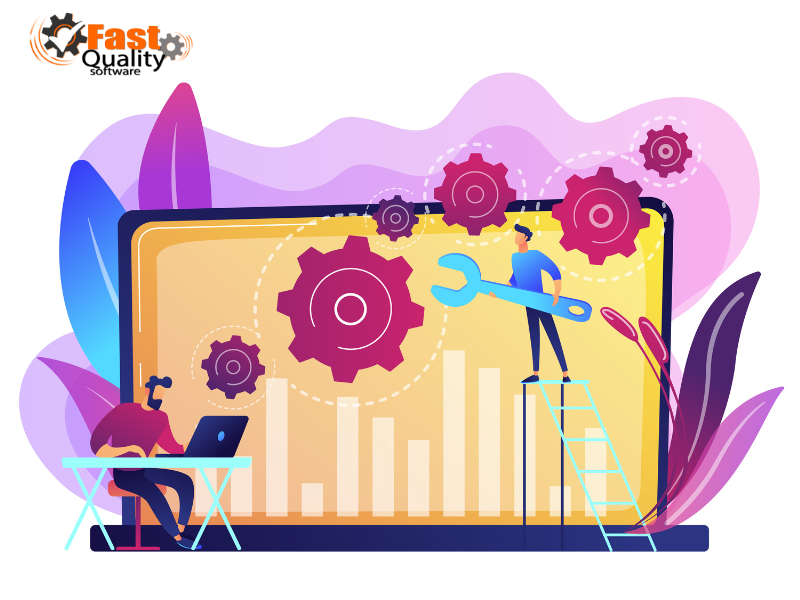
The primary goal of maintenance management is to guarantee productive process cycles that fully utilize resources. The maintenance management ensures that various assets are operational in line with requirements to generate products of consistently high quality while preventing unexpected breakdowns. Taking care of a lot of assets' maintenance requirements can be a little difficult if the records are to be maintained manually. This is where FAST QMS Maintenance Management Software plays a vital role. Fast Maintenance Management Software helps plan and record all types of breakdown to ensure that all the assets of the company to minimize breakdowns and failures.
The SPC software helps to analyze the data collected at APQP and PPAP stages is analyze by using various statistical tools such as mean,standards deviation, coefficient o fcorelation, regression analysis, t-test, z-test, various control charts such as x-chart, r-chart, p-chart, np-chart, histograms,pareto analysis, fishbone diagram etc. The software enables effective presentation of data collected is analyze by using appropriate tools. SPC software is available on mobile as well as tablet as well as desktop/laptop. The data can be viewed the graphical as well as tabuler formats by using various variables like machine wise,operator wise,superviser wise,inspector wise,date wise, shift wise,instruments wise,product wise,process wise , customer order wise, lot wise/batch wise etc.


The Organization is aware of the inefficiency, expense, and sustainability of a manual and paper-based method for managing quality documentation. FAST QMS offers the top-of-the-line Document Management Software by utilizing cutting-edge cloud technologies. FAST QMS Document Management Software is dependable, simple to use, and enhances your current document management procedure to:

Quality of Product

Quality of Process

Quality of Machine

Quality of People

Quality of Workplace

Quality of Service

Quality of Supplier

Quality of Instrument

Food & Beverages

Pharma

Aerospace & Defence

Healthcare & Medical

Manufacturing

Automotive

Electronics & Appliances
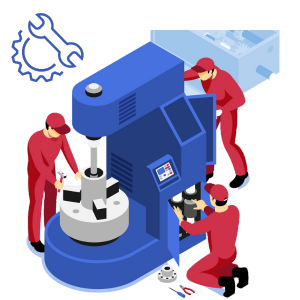
Engineering & machining
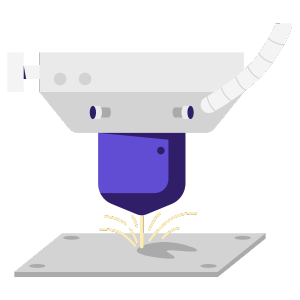
Precision Laser Cutting & Fabrication

Flexibility & Scalability

Enhance Security

Cloud / Web-based

Detailed Analytics & Reporting

Compliance Driven
Cost Effective

Alerts & Notifications

User Friendly Interface

Increasing Customer Satisfaction
Higher Productivity

Increase Efficiency

Reduce Waste

Cost Reduction

Improved Product & Services
Requirement Analysis

Software Training

Operation Video Manuals

Online Support Portal

On-Site
Training

Online
Training

Implementation Handholding

After Sales
Support
Barcode Scanner / Printer

Weighing Machine

Machine Data Loggers

Digital Measuring Instruments

Tally

SAP

Oracle

ERP






Copyright 2023 Fast Software Technology


